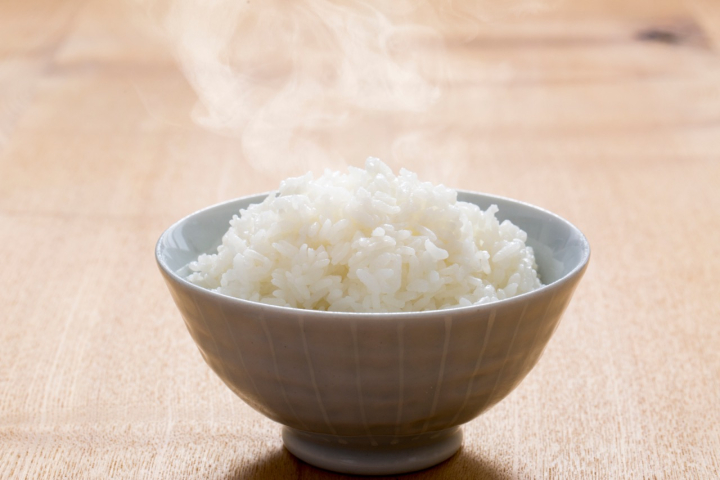
Food safety · Plain words
How long does cooked rice last — and can leftover rice make you sick?
Yes, leftover rice can make you sick if it is stored wrong. The good news: a few simple rules keep it safe. This page uses the official U.S. guidance, in plain words.
The short answer
Keep the fridge at 40°F or below. Put the rice in a covered, airtight container.
Freeze cooked rice for longer storage. 1–2 months is for best quality.
And one rule matters most: get the rice into the fridge within 1–2 hours of cooking. Rice left sitting out warm is where the trouble starts — read why below.
Why rice is different from most leftovers
A germ called Bacillus cereus (say: buh-SILL-us SEER-ee-us) is commonly found in dry, uncooked rice.
It survives in a tough form called a spore — think of it like a seed with a hard shell. Cooking does not kill the spores.
After cooking, if the rice sits warm at room temperature, those spores can wake up, grow, and make toxins (poisons). It is the toxin that makes people sick — not just the germ itself.
That is why rice needs faster, more careful handling than many other foods.
⚠ The key fact most pages bury
Reheating does NOT make badly stored rice safe.
The toxin made by Bacillus cereus is not destroyed by heat. Cooking it again, microwaving it until it steams, or frying it will not remove a toxin that is already there.
Reheating until steaming hot — 165°F — is still the right way to reheat rice that was stored properly. But it cannot rescue rice that sat out too long. No amount of reheating fixes that.
The safe way, step by step
Follow these in order, every time:
- Cool it fastSpread the rice out in a shallow container so it cools quickly. A deep, full pot stays warm in the middle for a long time.
- Fridge it within 1–2 hoursGet it into the fridge within 1–2 hours of cooking. If the room is hotter than 90°F — a hot kitchen, a picnic — the limit is 1 hour.
- Cover it tightStore it in a covered, airtight container in a fridge at 40°F or below.
- Eat it within 3–4 daysCount from the day you cooked it. Not sure which day that was? That is a sign to throw it out.
- Reheat until steaming hotHeat it all the way through to 165°F — steaming hot in the middle, not just warm at the edges.
- Reheat only onceTake out only what you will eat. Do not reheat the same rice again and again.
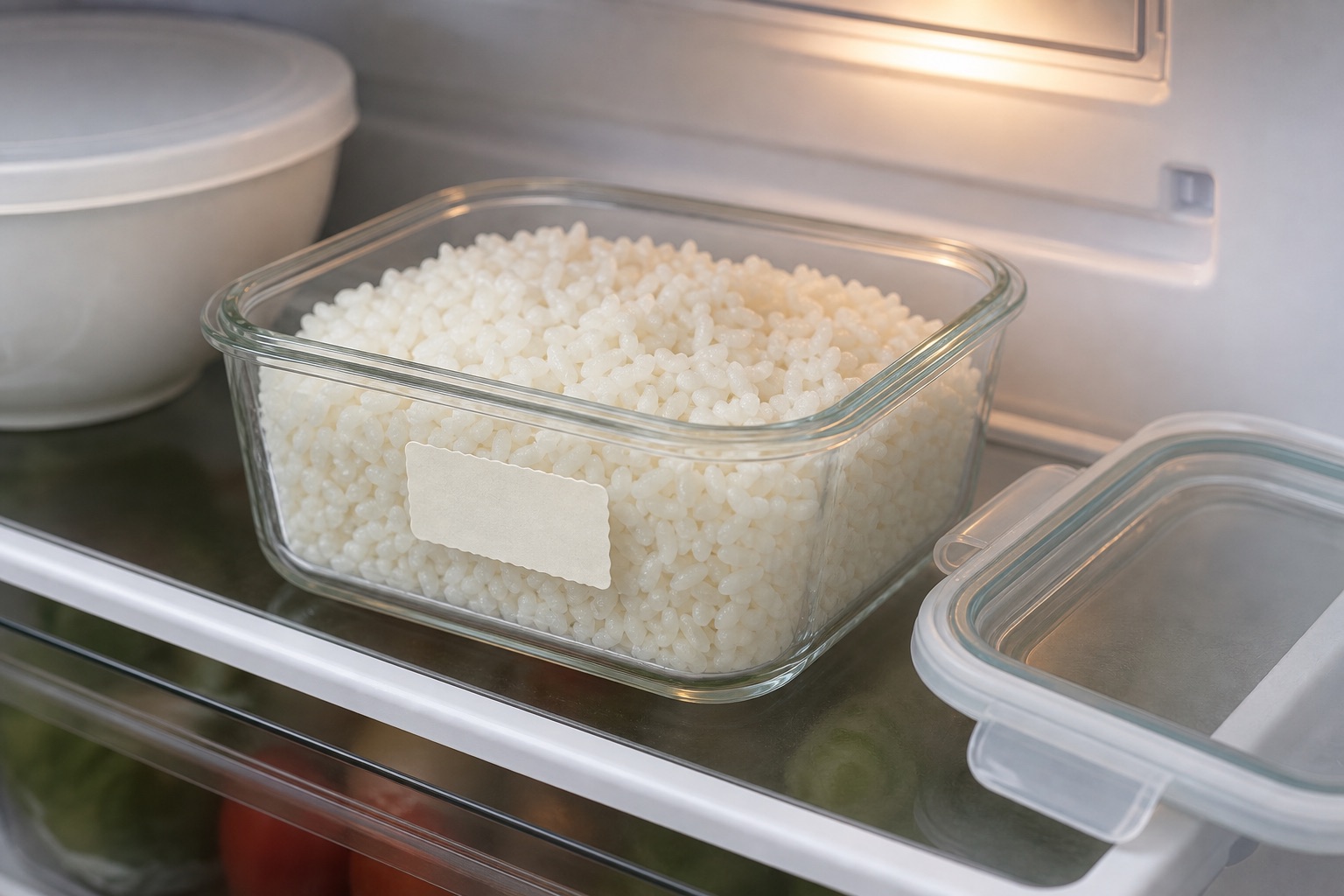
Rice stored the right way: in a shallow, covered container, in the fridge.
Quick check: is my rice still okay?
Answer three quick questions. This uses the same rules on this page — when in doubt, throw it out.
On a very hot day, the safe limit drops from 2 hours to 1 hour.
When in doubt, throw it out
Throw the rice away — even if it looks and smells fine — if:
- It sat out for more than 2 hours (or more than 1 hour in a room over 90°F), or
- It has been in the fridge for more than 4 days.
You cannot see or smell this toxin. Rice that looks fresh can still make you sick. Do not taste it to “check.”
What is “fried rice syndrome”?
“Fried rice syndrome” is the nickname for food poisoning from Bacillus cereus in rice dishes. It got the name because it was often linked to fried rice that had been cooked, left sitting, and reheated later.
It can happen with any cooked rice dish — plain rice, rice bowls, rice salads — not just fried rice.
What it feels like
Symptoms usually start within a few hours to about a day after eating the rice:
Most cases pass within about a day. Drink fluids, rest, and see the note below if you are worried.
Why do some pages say 4–6 days?
The 4–6 days figure is not a mistake, and it does not only come from old charts. It is what USDA FoodKeeper itself says in its own entry for cooked rice: 4–6 days in the fridge, and 6 months in the freezer.
But FoodKeeper also has a leftovers entry that names rice, and that one says 3–4 days in the fridge and 1–2 months in the freezer. The FoodSafety.gov Cold Food Storage Chart agrees with the shorter time — its leftovers line says 3–4 days. So the official sources do not fully agree with each other.
This page uses the shorter, safer numbers: 3–4 days in the fridge and 1–2 months in the freezer. When official numbers disagree, go with the shorter, safer one.
If you feel ill
This page is general food-safety information. It is not personal medical advice.
If you are ill and worried — especially with vomiting or diarrhea that will not stop, signs of dehydration, a high fever, or symptoms in a young child, an older adult, or someone who is pregnant or has a weak immune system — contact a medical professional or Poison Control (in the U.S., 1-800-222-1222) for advice about your own situation.
Sources
- USDA FoodKeeper (via FoodSafety.gov) — its entry for cooked rice says 4–6 days in the fridge and 6 months in the freezer; its leftovers entry, which names rice, says 3–4 days in the fridge and 1–2 months in the freezer. This page uses the shorter, safer times.
- FoodSafety.gov — Cold Food Storage Chart — leftovers: 3–4 days in the fridge.
- FoodSafety.gov — safe food handling — the 2-hour rule (1 hour above 90°F), fridge at 40°F or below, and reheating leftovers to 165°F.
Checked against FoodSafety.gov on November 3, 2026. Storage times are for best safety and quality when the food was handled and stored as described on this page.